Introduction
In 2026, choosing the right solar backup is tricky. The confusion between Tall Tubular vs Dry Battery is the biggest issue for Pakistani solar users today. However, most solar users are confused between Tall Tubular batteries (like Osaka, Phoenix, Exide) and Dry / Gel / AGM batteries (like Narada, Rocket, Volta).
As a Senior Solar Engineer working in Pakistan, I see this confusion daily. In this 2026 guide, I will explain both options in simple English so you can choose the right battery for your home.
Tall Tubular Batteries (Deep Cycle)
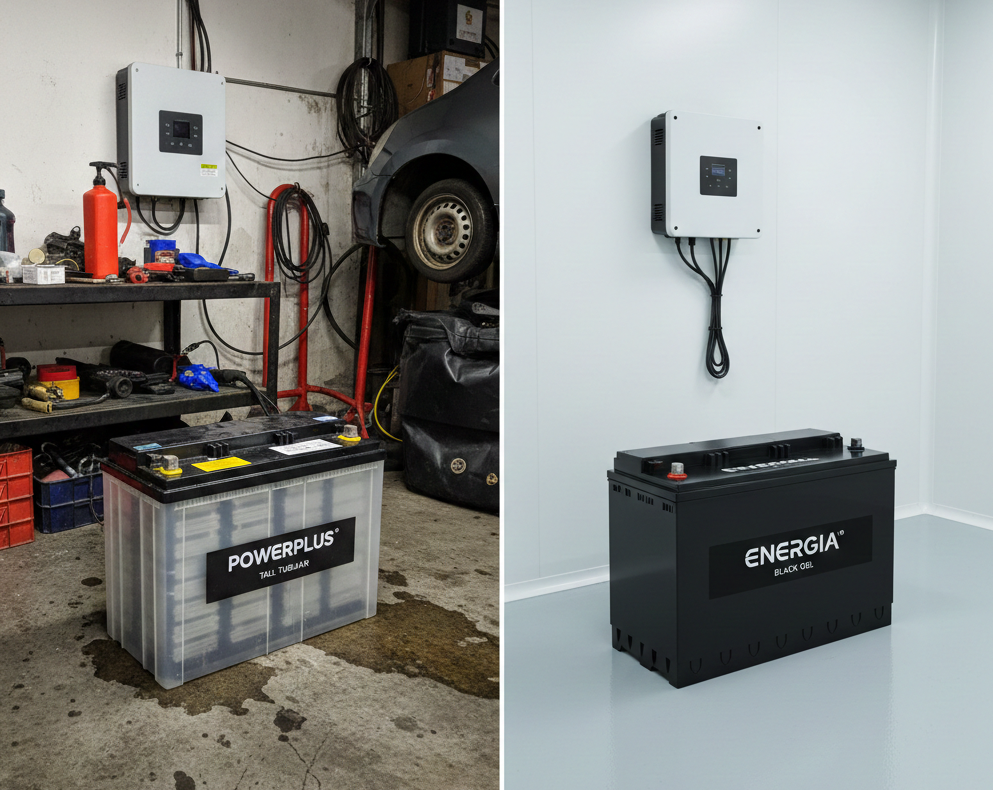
Tall Tubular batteries are liquid lead-acid batteries, also known as deep cycle batteries, specially designed for long backup. They are very common in Pakistan and widely used with solar systems.
These batteries contain liquid acid inside and need regular care to perform well over many years.
Pros of Tall Tubular Batteries
Tall Tubular batteries are much cheaper compared to dry batteries, which makes them very popular. If maintained properly, they can easily give 4 to 6 years of life. They are also rugged and heat-tolerant, which means they perform well in Pakistan’s hot climate. Another big advantage is that local technicians can easily repair or handle them.
Cons of Tall Tubular Batteries
The biggest drawback is maintenance. You must add distilled water every month, especially in summer. They also release acid fumes, so they must be installed in a well-ventilated area like a garage or store room. They are not ideal for bedrooms or apartments.
Dry Batteries (AGM / Gel Batteries)
Dry batteries are sealed batteries, meaning there is no liquid acid visible and no water filling required. They are usually imported and considered more modern.
Pros of Dry Batteries
Dry batteries are maintenance-free, which means no water filling and no acid handling. They are safe for indoor use, making them suitable for apartments and flats. They are also clean, compact, and can be installed almost anywhere without smell or fumes.
Cons of Dry Batteries
Dry batteries are expensive, sometimes costing almost double compared to tubular batteries. They are also very sensitive to heat. If installed in a hot room or without proper ventilation, they can fail quickly. Another issue is that they require proper inverter settings, otherwise their life reduces sharply.
Tall Tubular vs Dry Battery – Comparison Table
| Feature | Tall Tubular Battery | Dry / Gel Battery |
|---|---|---|
| Price (2026) | Low / Affordable | High / Expensive |
| Average Life | 4–6 years (with care) | 3–5 years (heat dependent) |
| Maintenance | Monthly water filling | No maintenance |
| Heat Tolerance | Excellent | Poor to Average |
| Indoor Safety | Not recommended | Fully safe |
| Backup Performance | Strong and reliable | Good but sensitive |
Tall Tubular vs Dry Battery: Which One Should You Buy?
Scenario A: You have a garage or airy store room and want to save money
If you have proper ventilation and don’t mind checking water levels once a month, then Tall Tubular batteries are the best choice. They give longer backup at a lower cost and handle Pakistan’s heat very well.
Scenario B: You live in a flat or want zero headache
If you live in an apartment or want a maintenance-free solution, then Dry batteries are better. They are clean, safe, and easy to use, especially for people who do not want regular checks.
Final Verdict (2026 Expert Opinion)
When comparing Tall Tubular vs Dry Battery, the Tall Tubular is still the ‘King’ for most Pakistani homes in 2026. They offer the best balance of price, durability, and heat resistance, which suits Pakistan’s environment perfectly.
Dry batteries are excellent for specific cases like apartments or offices, but their high price and heat sensitivity make them less practical for the average home.
👉 My advice:
If budget and long life matter most → Go Tubular
If convenience and indoor safety matter more → Go Dry
If you need help selecting the right battery size or brand for your solar system, Solar Hub Official is always here to guide you with honest and practical advice.
3 thoughts on “Tall Tubular vs Dry Battery: Best Choice for Solar in Pakistan (2026 Guide)”