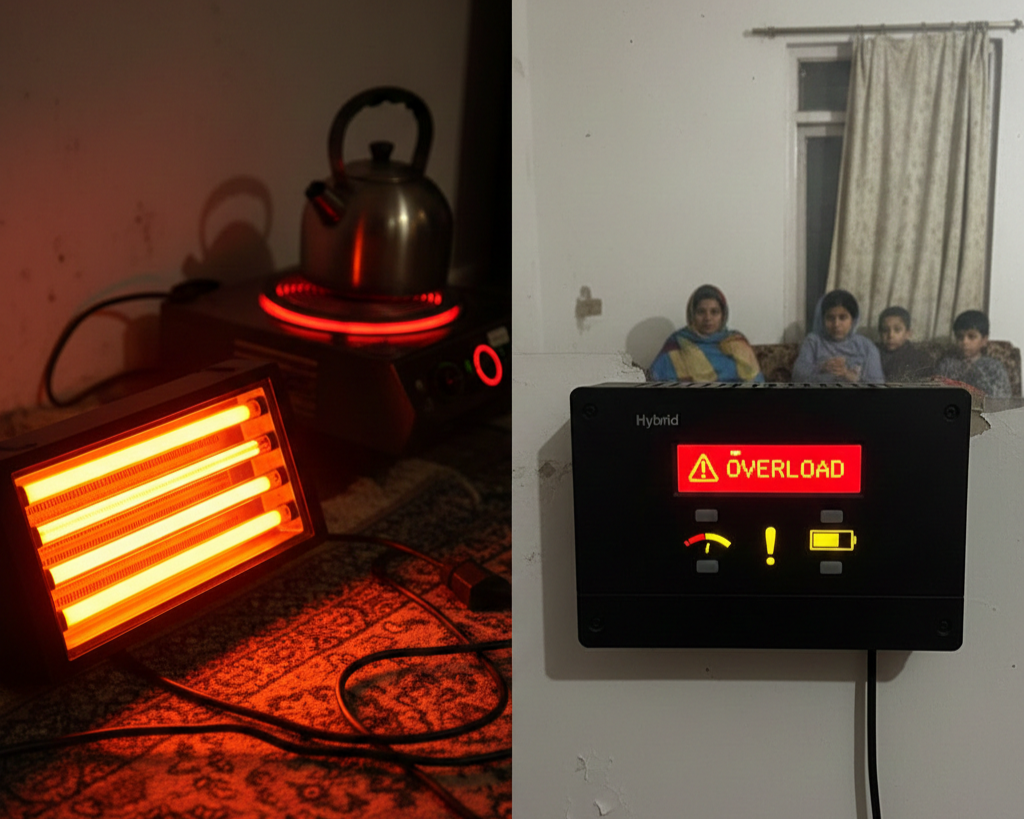
Due to gas load shedding, many people are trying to run an electric heater on solar to stay warm in Winter 2026. In January and February, gas load shedding became severe in many cities. In some areas, gas is available only for a few hours or not at all. Because of this, many families are shifting to electric heaters and electric stoves (hot plates).
People with hybrid systems ask: Can I run an electric heater on solar safely without draining batteries?
As a senior solar engineer, let me explain the reality in simple words.
Power Consumption of Electric Heater on Solar
Electric heaters and hot plates are high power appliances.
- Small room heater: 1000W to 1500W
- Medium heater: 2000W
- Single hot plate: 1000W to 1500W
- Double hot plate: 2000W or more
The important point is this:
These appliances take continuous power. They do not turn off and on like fans or lights. Once switched on, they keep pulling heavy load.
Comparison You Must Understand
Many people are surprised by this fact:
1 Electric Heater ≈ 1.5 Ton AC (in watts)
A 1.5 ton inverter AC usually runs between 1200W to 1800W.
So when you run a heater or hot plate, your solar system feels almost the same load as running an AC.
This is why systems trip, batteries drain fast, and inverters give overload errors.
The Biggest Risk: Batteries
This is where most damage happens.
If you run a heater or hot plate at night or on backup, the load comes from batteries.
Example:
- 1 heater = 1500W
- Typical battery backup on 3kW or 5kW system = 2 to 4 batteries
Result:
- Batteries can drain within 45 minutes to 1 hour
- Battery temperature increases
- Battery cycles get wasted
- Battery life reduces drastically
In simple words:
Using heaters on batteries is the fastest way to kill your batteries.
Whether you have lead-acid or lithium, heating load is not battery-friendly. Only very large lithium banks can tolerate it, and those are expensive.
The Safe Way to Run Electric Heater on Solar
If you really want to use electric heating, follow these rules strictly:
- Use Only in Daytime
Run heater or hot plate only when the sun is bright (11am to 3pm). - Run Directly on Solar Panels (PV)
Let the load go directly on solar generation, not batteries. - Never Use on Night Backup
Avoid using heaters after sunset, even if batteries look full. - One Appliance at a Time
Do not run heater and hot plate together on small systems.
Recommended Solar System Size
For safe daytime usage:
- Minimum Inverter: 3kW (very limited use)
- Better Option: 5kW hybrid inverter
- Panels: At least equal or more than inverter size
Even with a 5kW system, heating should be controlled and limited.
Power Consumption Table (Winter Appliances)
| Appliance | Power Consumption |
|---|---|
| Electric Heater | 1000W – 2000W |
| Electric Geyser (Rod) | 2000W – 3000W |
| Electric Stove / Hot Plate | 1000W – 2000W |
| Electric Iron | 1000W – 2200W |
Note: Electric geyser rods are the worst option on solar.
Better and Smarter Alternatives
Instead of burning batteries and stressing your system, consider these options:
- Inverter AC on Heating Mode
Modern inverter ACs on heat mode usually consume less power than electric heaters and provide better room heating. - Solar Water Geyser (Vacuum Tubes)
This is the best solution for hot water in winter. No WAPDA units, no battery stress. - Gas + Solar Mix
Use gas when available and solar only in peak sunshine hours.
Final Verdict
Solar can help during gas load shedding, but only if used smartly.
- ✅ Use electric heaters or hot plates only during sunny daytime
- ❌ Do not use them on battery backup at night
- ❌ Avoid electric geyser rods completely
- ✅ Save WAPDA units by shifting heavy load to daytime solar
Solar is for saving bills, not for destroying batteries.
Use heating carefully, and your system will serve you well for many winters to come.