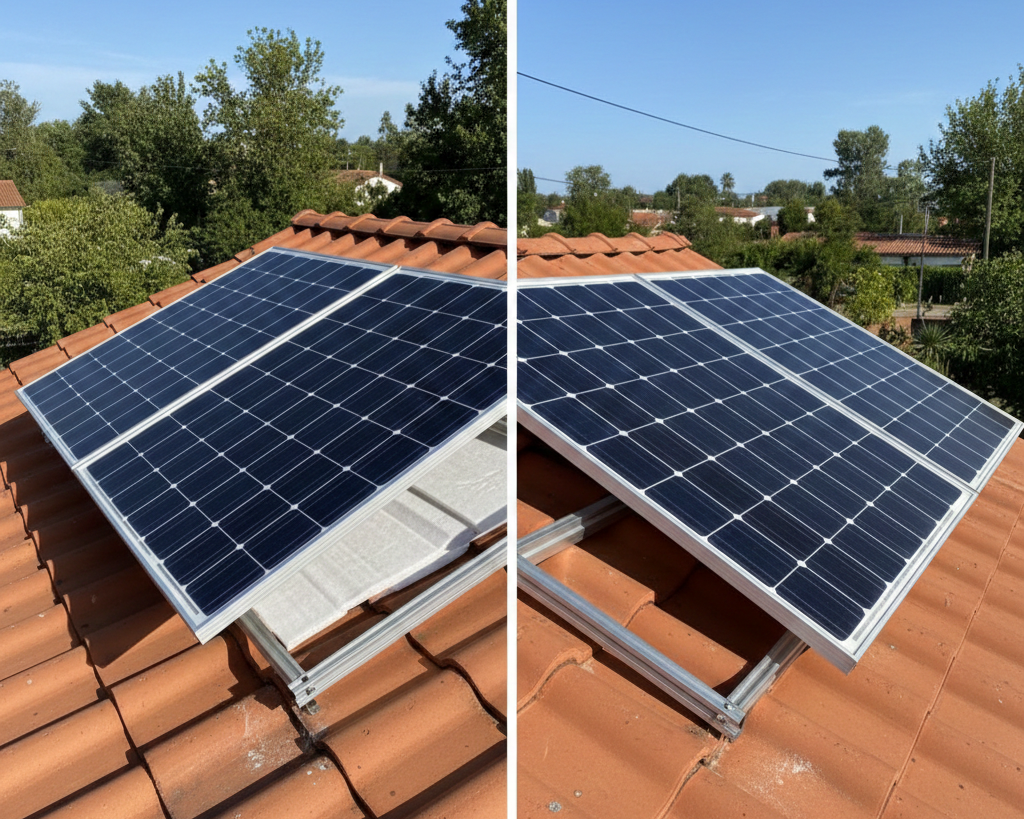
Are you planning to install a solar system in 2026 but feeling confused between Bifacial vs Monofacial solar panels? You are not alone.
Walk into any solar market in Pakistan today, and the shopkeeper will strongly advise you to buy “Bifacial” panels. But what exactly are they? Do they really produce twice as much electricity? And most importantly, are they worth the extra money?
In this simple guide, we will compare Bifacial vs Monofacial solar panels to help you make the smartest decision for your home or business in Pakistan.
What are Monofacial Solar Panels?
“Mono” means single. Monofacial solar panels are the standard, traditional panels we have been using for years. They have Solar Cells on the front side to absorb sunlight, while the backside is covered with a solid, usually white or black, plastic backsheet. When comparing Bifacial vs Monofacial solar panels, it is important to understand how this traditional technology works.
- How it works: They generate electricity only from sunlight that directly hits the front side.
- Best for: Roofs where the panels are installed completely flat against the surface.
What are Bifacial Solar Panels?
“Bi” means two. Bifacial solar panels are the latest technology. Instead of a solid plastic backsheet, they have a transparent glass back. This allows the solar cells to absorb sunlight from both the front and the back.
- How it works: The front side absorbs direct sunlight. The backside absorbs the sunlight that bounces (reflects) off your roof or the ground.
- Best for: Open roofs, elevated structures, and areas with light-colored floors.
Bifacial vs Monofacial Solar Panels: Key Differences
To make things easy, let’s compare them on three main points:
1. Power Generation (Efficiency)
Monofacial panels only give you the rated watts from the front (for example, 550W). Bifacial panels generate power from both sides, with an extra 5% to 15% from the back. So, a 550W bifacial panel can produce up to 600W if the sunlight reflection on your roof is good. If your system makes more power, it will charge your backup batteries much faster. Thinking of upgrading your battery? Check our comparison on the Best Phoenix vs Osaka Tubular Battery Price in Pakistan 2026 to store this extra electricity safely.
2. Installation Structure Matters
You cannot just put a bifacial panel flat on a dark roof and expect it to work from both sides. To get that extra back-side power, the panel must be lifted above the ground so light can pass underneath. Therefore, you will need a proper elevated stand. You can check the latest rates for these structures in our guide on the Best Solar Panel Stand Price in Pakistan (2026 Structure Rates) to budget your installation accurately.
3. Price Comparison in Pakistan (Feb 2026)
When looking at the Bifacial vs Monofacial solar panels market, you will notice a slight price difference. Because bifacial panels use double glass (glass on the front and back), they are slightly more expensive than monofacial panels.
- Monofacial A-Grade Panel Price: Rs. 27 to Rs. 30 per watt.
- Bifacial A-Grade Panel (N-Type) Price: Rs. 30 to Rs. 35 per watt. (Note: Prices change depending on the brand, like Longi, Jinko, or Canadian Solar).
Can Wrong Panels Harm Your Inverter?
No, bifacial panels do not harm your inverter. However, because they produce more current from the backside on very sunny days, your installer must ensure your inverter can handle the extra Ampere (Current) load. Sometimes, poor wiring or mismatched voltage can trigger error alarms on your screen. If your inverter ever shows a red light, keep our Common Solar Inverter Fault Codes & Solutions (Inverex, Growatt, Tesla 2026 Guide) handy to fix it quickly.
Final Verdict: Which One Should You Buy in Pakistan?
The battle of Bifacial vs Monofacial solar panels comes down to your roof space and budget:
- Buy Monofacial if: You are on a tight budget, or you are installing the panels completely flat against a wall or an angled roof with zero space underneath.
- Buy Bifacial if: You are building an elevated structure (where you can walk under the panels), your roof is painted white (which reflects more light), and you want maximum power generation in a limited space.
In 2026, the price difference between the two is very small, making Bifacial N-Type panels the better and smarter investment for the future.