
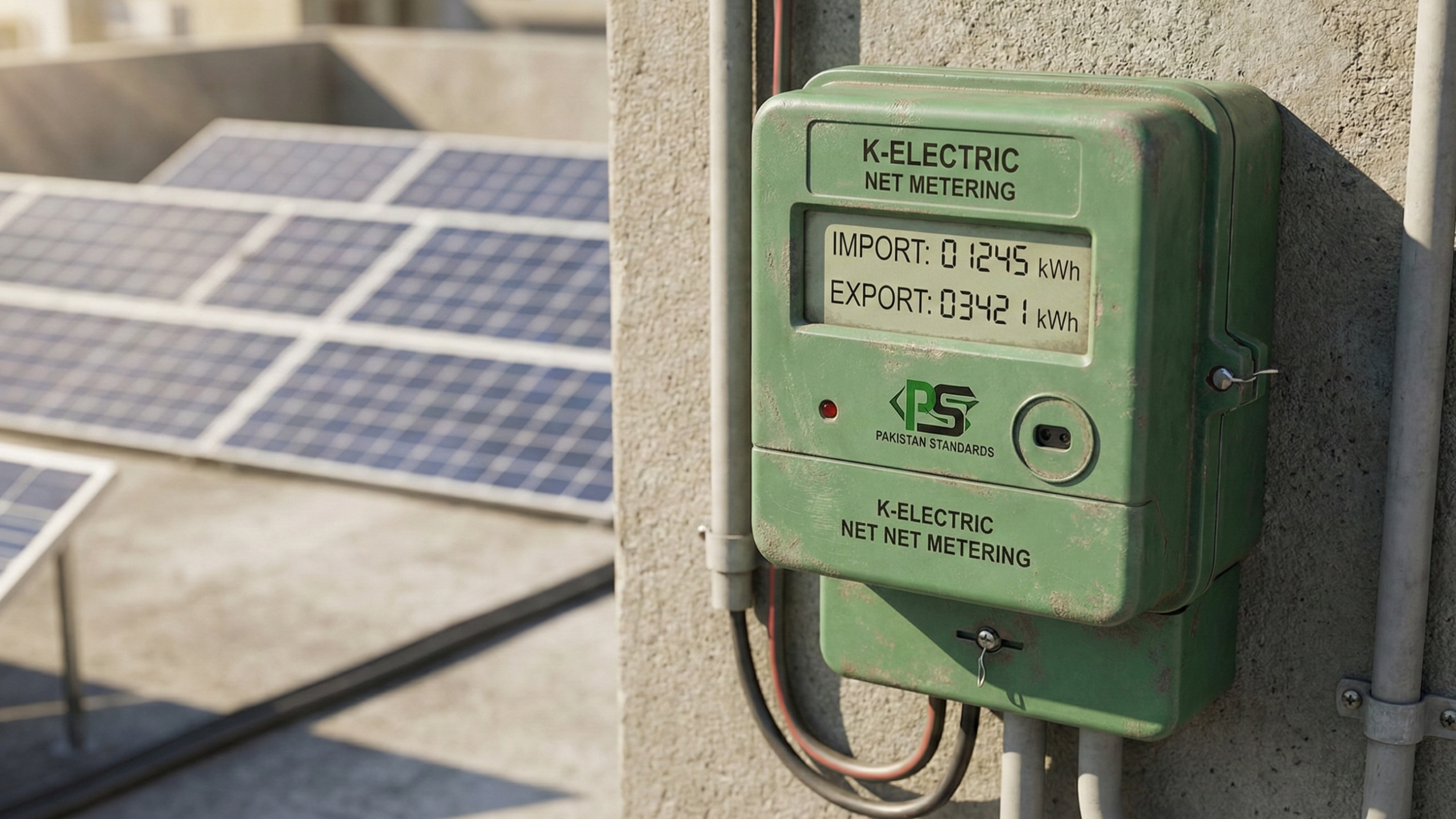
Introduction: What is Net Metering in Pakistan?
Net Metering in Pakistan is a system that allows you to sell extra electricity from your solar system back to WAPDA (DISCO). In simple words, when your solar panels produce more electricity than your home uses, that extra units go to the national grid, and WAPDA adjusts them in your bill.
Due to high bills, Net Metering in Pakistan has become a lifesaver for many households. With a properly designed solar system and a green meter, many users reduce their electricity bill to near zero, and in some months, they even get credit units.
This guide explains the complete net metering (green meter) process in Pakistan for 2026 in very simple English, so even a common man can understand it easily.
What Are the Requirements for Net Metering?
Before applying for net metering, you must meet some basic requirements set by NEPRA and WAPDA.
First, you need a 3-phase electricity connection. Net metering is not allowed on single-phase meters.
Second, your solar system capacity must be 5kW or above. Systems smaller than 5kW are not eligible for net metering under current rules.
Third, you must install an On-Grid or Hybrid inverter that supports net metering. Normal off-grid inverters do not qualify. A reliable inverter is very important for approval and long-term performance, so you should choose carefully.
You will also need complete system documentation, including inverter datasheets, solar panel details, and single-line diagrams, which are usually handled by your installer.
Net Metering Process in Pakistan (Step-by-Step)
Step 1: Application Submission
The first step is applying for net metering through an AEDB (now PPIB) certified solar installer. Individuals cannot submit the application directly in most cases. The installer prepares your documents and submits them to your local DISCO such as LESCO, IESCO, GEPCO, FESCO, etc.
This step includes system sizing, drawings, and submission of required forms. Once submitted, your application goes into the review process.
Step 2: Inspection & Demand Note
After initial approval, WAPDA schedules a site inspection. Their team checks your solar system, inverter specifications, safety measures, and meter location.
If everything is found correct, WAPDA issues a Demand Note, which is an official payment challan for the green meter and related charges.
This stage often takes time due to workload and administrative delays, so patience is required.
Step 3: Payment & Green Meter Installation
After paying the demand note, WAPDA processes your file and installs a bi-directional green meter. This meter records both imported and exported electricity.
Once installed, your net metering agreement becomes active, and your solar system officially starts exporting units to the grid.
Green Meter Price in Pakistan 2026 (Official Rates)
When calculating the cost of Net Metering in Pakistan, it is important to understand the difference between the “Official Fee” and the “Market Rate”. Many people get confused about why installers ask for 1 Lakh+ when the official fee is low.
Here is the complete breakdown of Green Meter Price and Official Fees in Pakistan for 2026.
1. Green Meter Hardware Price (Meter Cost)
This is the price of the meter itself, which you have to buy from an approved vendor or installer.
| Meter Type (Brand) | Price Range (PKR) |
| Microstar (3 Phase) | Rs. 26,000 – 30,000 |
| PEL (3 Phase) | Rs. 27,000 – 32,000 |
| Syed Bhais (3 Phase) | Rs. 28,000 – 33,000 |
| Smart AMI Green Meter | Rs. 45,000 – 55,000 |
(Note: Prices can vary by city and dealer)
2. Official NEPRA / DISCO Fees (Challan)
These are the official government charges that are paid in the bank via Demand Note.
| Expense Head | Estimated Cost (PKR) |
| Application Processing Fee | Rs. 1,000 – 3,000 |
| NEPRA Generation License | Rs. 0 (Free for up to 25kW) |
| Inspection & Testing Fee | Rs. 1,500 – 5,000 |
| Total Estimated Official Fee | Rs. 5,000 – 8,000 |
Total Estimated Cost (File Processing)
Although the official government fee is low (approx Rs. 8,000) and the meter costs around Rs. 30,000, solar companies usually charge a “Package Deal”.
In 2026, the market rate for a complete Net Metering File (Processing + Meter + Installation + Bribery/Speed Money) ranges between PKR 100,000 to 150,000. This depends on your DISCO (LESCO, IESCO, PESCO, etc.) and how fast you want the work done.
It is always better to work with a trusted and experienced solar company to avoid unnecessary delays.
Benefits of Net Metering in Pakistan
The biggest benefit of net metering is almost zero electricity bills. In summer, your exported units adjust against night usage, reducing bills drastically.
Another major advantage is fast return on investment. Most net-metered solar systems recover their cost within 3 to 4 years, after which electricity is nearly free for the next 15 to 20 years.
Net metering also increases property value, provides protection against future tariff hikes, and contributes to clean and green energy for Pakistan.
Net Metering 2026 Rules & Gross Metering Rumors
In 2026, there have been many rumors about Gross Metering replacing Net Metering. As of now, Net Metering is still active and officially approved in Pakistan.
Although policy discussions are ongoing, existing net-metered consumers remain safe under current agreements. New applicants can still apply under net metering rules without any issue at present.
Important Note About Inverter Selection
To get net metering approval, you must use a certified On-Grid or Hybrid inverter. Inverter quality plays a key role in system approval, performance, and long-term reliability.
👉 You need a good On-Grid or Hybrid Inverter for this.
Frequently Asked Questions (FAQs)
Can I get Net Metering on a 3kW solar system?
No. As per current rules, net metering is only allowed on 5kW or higher systems with a 3-phase connection.
How long does the Net Metering process take?
On average, it takes 3 to 4 months, depending on your DISCO, documentation accuracy, and follow-ups.
Is Net Metering worth it in 2026?
Yes. With rising electricity prices, net metering remains one of the best long-term investments in Pakistan.
Final Words from Solar Hub Official
Net metering is not just a luxury anymore; it is a smart financial decision for Pakistani households and businesses. With proper planning, quality equipment, and the right installer, you can legally sell electricity to WAPDA and protect yourself from future bill shocks.
If you are planning solar in 2026, understanding the net metering process is the first step toward zero bills and energy independence.
Solar Hub Official – Powering Pakistan with Smart Solar Solutions ☀️
1 thought on “Net Metering in Pakistan 2026: Green Meter Price & Official Fee”