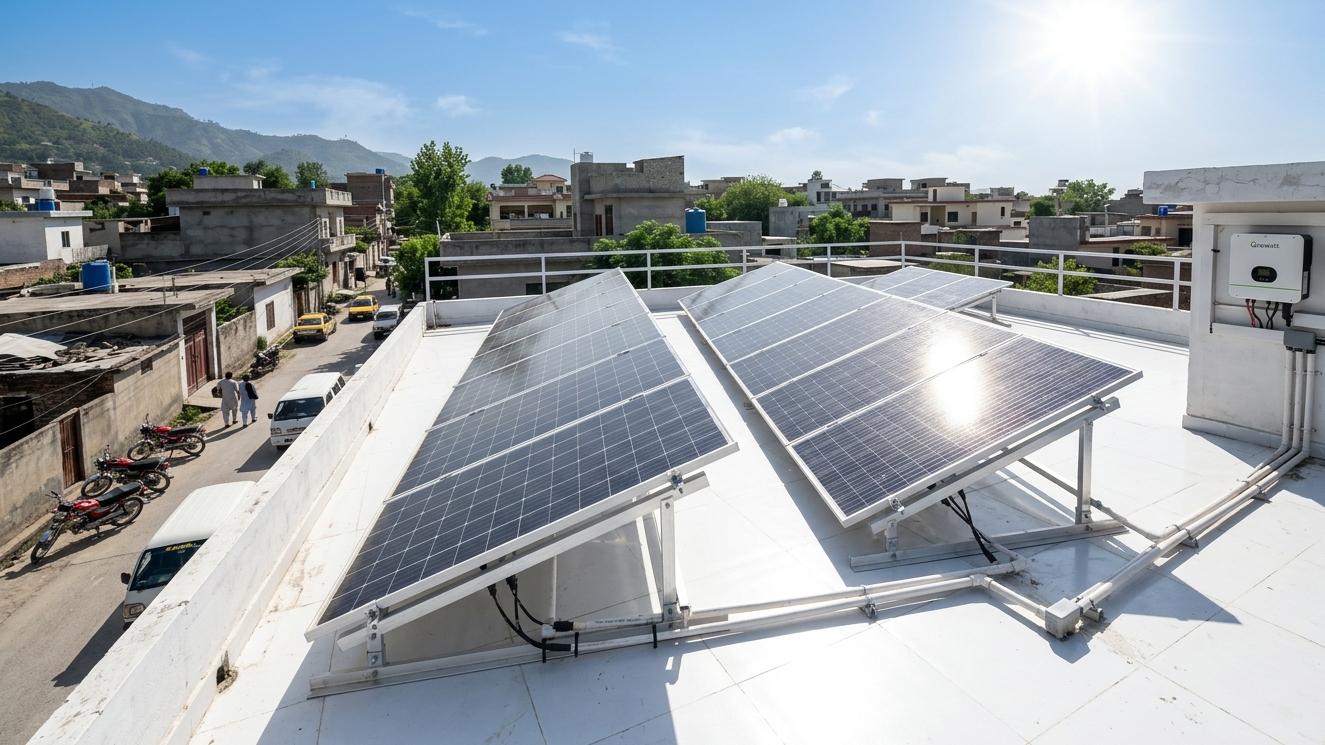
If you are planning to upgrade your solar system with a new 6kw hybrid solar inverter in 2026, you must have heard the new market hype. Salesmen everywhere are pushing customers to buy bifacial solar panels in Pakistan, claiming they will give you 20% to 30% extra free electricity. But is this a scientific fact, or just a clever marketing trick to empty your pockets?
In this comprehensive guide, we will review the real-world performance of this new technology and help you decide if it is the right choice for your home.
What Are Bifacial Solar Panels?
Traditional solar panels (Monofacial) only capture sunlight from the front side. The back is covered with an opaque plastic sheet. On the other hand, bifacial panels have tempered glass on both the front and the back. This transparent design allows the solar cells to absorb direct sunlight from the top and reflected sunlight from the bottom.
In theory, this dual-sided absorption increases the total energy output. However, the reality of installing bifacial solar panels in Pakistan is quite different from laboratory tests.
The Myth of 30% Extra Power
Shopkeepers often claim that bifacial panels will give you up to 30% extra electricity. This is mathematically misleading for regular home users. The backside power generation depends entirely on “Albedo” (the reflecting power of a surface).
If you install these panels on a regular dark concrete roof or a dusty surface, the backside reflection will be almost zero. To get that extra 10% to 15% power, your roof must be painted pure white, or you must have white marble tiles installed. Furthermore, the panels need to be cleaned regularly from the bottom as well, which is practically very difficult for a normal homeowner.
The Hidden Installation Costs
Another major factor that buyers ignore is the mounting structure. You cannot install bifacial panels flush against the roof or on standard short stands. They require special, elevated L3 or L4 structures so that sunlight can reach underneath them.
Because of this specific requirement, the overall solar panel stand price will increase significantly. When you calculate the extra cost of the panels, the expensive elevated structure, and the white roof paint, the return on investment (ROI) becomes very slow.
Who Should Actually Buy Them?
Despite the drawbacks for normal homes, bifacial solar panels in Pakistan are an excellent choice for specific commercial setups. If you are installing a massive solar system over a white-painted factory roof, a ground-mounted system in an open sandy area, or using them as a solar canopy (car parking shade), they will perform brilliantly. For these specific commercial scenarios, top brands offer great bifacial options, which you can explore in our Longi vs Jinko solar panels comparison guide.
Durability and Dual-Glass Technology
When investing hundreds of thousands of rupees, buyers naturally worry about the lifespan of their system. Fortunately, bifacial solar panels in Pakistan offer a major advantage in durability. Unlike traditional panels that have a plastic backsheet, bifacial models use dual-glass technology. This means they have tough, tempered glass on both the front and the rear side. This dual-glass structure makes them highly resistant to micro-cracks, high humidity, and extreme summer temperatures. Because of this solid build quality, many top-tier brands offer a 30-year performance warranty on bifacial panels, which is 5 years more than standard monofacial panels. This long-term reliability is a great bonus for large-scale commercial investors.
Final Verdict
So, should a normal homeowner spend extra money on this technology? The short answer is no. For a standard residential rooftop, investing in high-efficiency, regular Mono PERC or N-Type monofacial panels is a much smarter and cost-effective decision. The hype surrounding bifacial solar panels in Pakistan is mostly beneficial for commercial projects with highly reflective surfaces, not for standard home rooftops. Save your money and invest it in a better inverter or high-quality copper wiring instead!